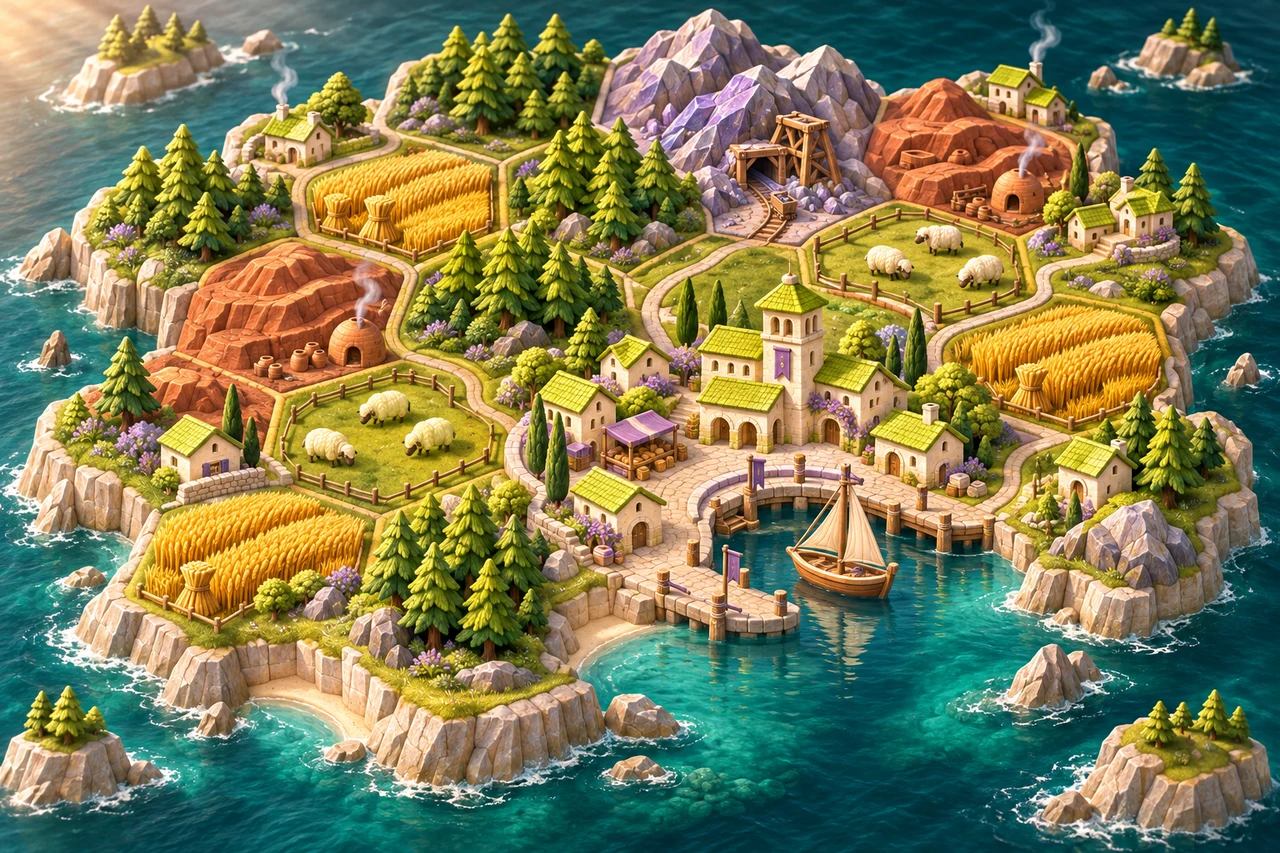
Harborbound is an original Catan-inspired game with its own artwork and house rules. Play solo against computer fleets or invite two to four players. The storm, after-roll action cards and 240-turn limit are Harborbound rules; this guide describes the game implemented here.
Your first shores
Place two settlements and two roads in snake order. Your second settlement receives one resource from each adjacent productive hex. Leave one empty intersection between settlements.
Roll, collect, build
Roll two dice each turn. Matching hexes give one resource per neighboring settlement or two per city. The storm blocks its hex. If the bank cannot pay everyone for a resource, nobody receives that resource on that roll.
Roads and cities
Roads cost timber + clay. Settlements cost timber + clay + wool + grain. Cities cost two grain + three ore. Build along your own roads; an opponent’s settlement blocks your route. You have 15 roads, 5 settlements and 4 cities.
Trade with the coast
Exchange four of one resource for one at the bank. An owned general port improves this to 3:1; a matching resource port gives 2:1. Offer a player any resources you own for different resources. Either party can end the offer.
Weather the storm
A seven makes every fleet with more than seven resource cards return half, rounded down. The roller then moves the storm and salvages one random resource from an eligible neighboring opponent.
Develop your fleet
A development card costs wool + grain + ore. Play one older card after rolling each turn. Patrol moves the storm; Harvest takes two bank resources; Trade monopoly takes one resource type from all rivals; Roadworks gives two free roads. Charters are hidden points and count immediately.
Ten points to glory
Settlements score one, cities two, and Charters one. The longest unbroken road of at least five edges and the largest patrol of at least three each score two. A tied award stays with its holder. Reach ten on your own turn to win. After 240 turns, highest points wins; tied leaders draw.
Private hands. Shared island.
Opponents see card counts, buildings and public points, not your resource mix or development cards. Online dice and cards are controlled by the server. Conceding hands your fleet to the computer so friends can continue. Solo victories earn practice points; online games do not.
A little inspiration.
Now make it your own.