Start with Flux Four for an easy-to-explain rivalry, or choose Prism Pop if you want to solve the same board together. Chess, Pocket Pool and Durak offer different reasons to stay for another match: deeper positional decisions, physical aiming or hidden-hand card play.
This Tailorgame editorial selection was checked on November 9, 2026. We prioritize readable decisions, the explanation needed before the first turn, and room to try another approach. Different priorities can change the order.
The five picks at a glance
| Rank | Game | Play together how | Choose it for |
|---|---|---|---|
| 1 | Flux Four | Competitive, two players | A visible board and a one-use column shift |
| 2 | Prism Pop | Cooperative, two players | Discussing shots toward a shared goal |
| 3 | Chess | Competitive, two players | Untimed positional planning |
| 4 | Pocket Pool | Competitive, two players | Aiming, power and the next position |
| 5 | Durak | Competitive, two to four seats | Hidden cards and changing attacks |
1. Flux Four: best first pick for a friendly rivalry
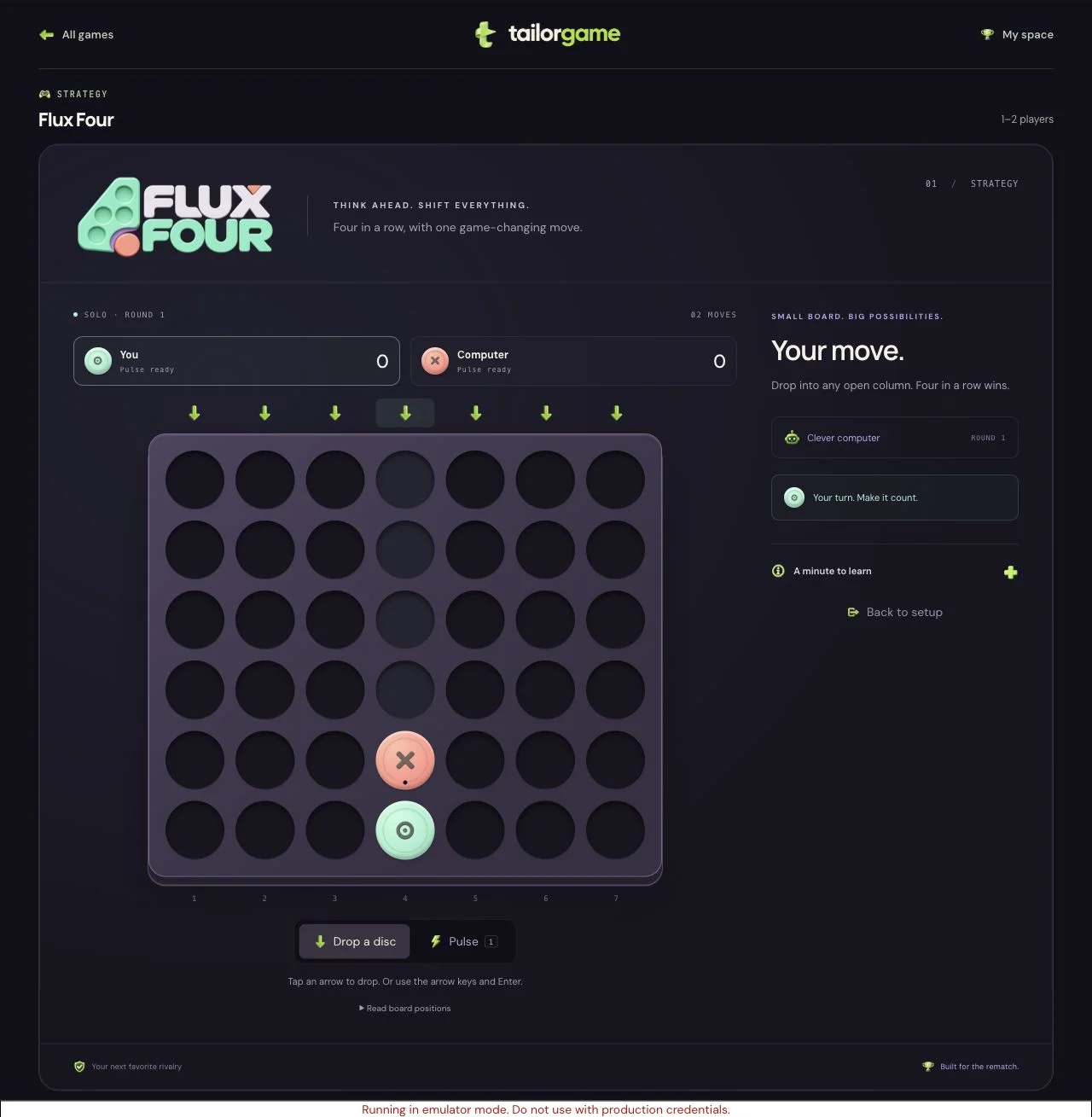
Drop a disc into one of seven columns and connect four horizontally, vertically or diagonally. The visible board gives both players something concrete to discuss after a missed block or winning sequence.
Each player also has one Pulse per match. It removes their own bottom disc from a column and shifts the discs above it downward. Select Drop a disc or Pulse, then choose the column. A Pulse spends your turn and can give your opponent a winning line, so inspect the shifted board before using it.
Flux Four leads for its readable choices and compact rules. Its limitation: this is a rivalry. Choose the next entry to help your friend instead.
2. Prism Pop: best for planning the same shot together
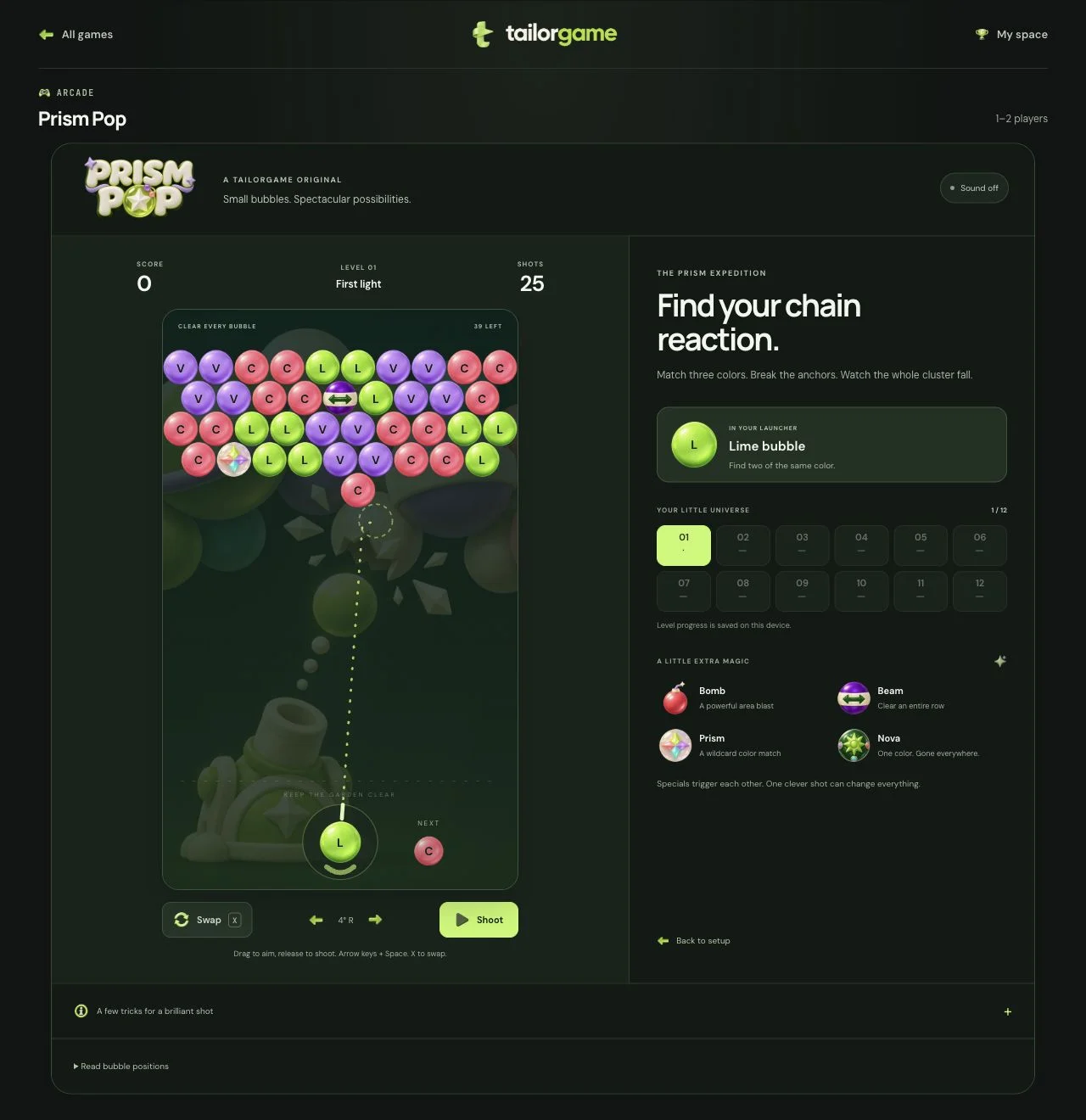
Prism Pop gives two players one bubble board, one ammunition queue and a shared score. Match three connected bubbles of the same color, bounce off a wall, or remove an anchor so unsupported bubbles fall.
Choose Together, create a private room and have your friend join before the host selects Start together. Players alternate shots. Swapping the current and next bubble is available once before each shot and keeps the active player’s turn; shooting passes play to the teammate. Use the pointer or focus the board and use Left/Right, Space or Enter, and X to swap.
Speculative shots spend the shared allowance, so agree on a target. The host continues after a cleared stage.
3. Chess: best for deeper positional planning
Choose Chess to compare plans across several moves. Select a piece and then a highlighted legal destination; keyboard users can move board focus with arrow keys and activate with Enter or Space.
Tailorgame’s game is untimed Chess. Pause to examine a position; choose another game if you need a clock to keep play moving. Takebacks are solo-only.
Chess may lead your list if both players know it. Newcomers have more rules to learn.
4. Pocket Pool: best for aiming and position play
Aim on the table, set the power and shoot. A legal pot of your assigned group keeps your turn; a miss passes play. Plan where the cue ball may finish as well as which ball to pocket.
This is eight-ball with friendly house rules. The first legal pot after the break assigns solids or stripes. Clear your group, then legally pot the eight. Fouls give the opponent ball in hand, while an early or foul pot of the eight after the break loses the game.
Read the in-game house rules: there are no spin controls or called pockets. Choose Pocket Pool for aiming and position play.
5. Durak: best for a card-playing pair that may grow
Durak is the choice when you enjoy reacting to information you cannot fully see. Attack with a card, defend with a higher card of the same suit or an eligible trump, then watch which ranks become available for further attacks. The last player left holding cards is the Durak.
Two friends can choose two seats in Online with friends. The same game also supports three or four seats, with computers filling empty places when the host starts. Decide the group before dealing: new members cannot join an already-started room.
Hidden hands and sequential throw-ins need more explanation. Choose Durak when both players know the rules or another friend may join next time. Start with the Durak play guide.
Before you send the invitation
Both friends need to sign in. Playing is free; AI creation credits are separate. Use the dedicated room controls inside your chosen game, rather than the general friends room, for synchronized play. Online results stay in those game rooms and do not add profile practice points.
These ranks are editorial choices, not popularity positions. Tailorgame’s most-played ranking counts all-time distinct accounts with a saved completed result, with ties sharing a rank. It does not measure live players or determine a winner for 2026.
Open Flux Four for a rivalry, or Prism Pop for a shared success. Choose whether you want to compete or cooperate, then send the invitation.
A little inspiration.
Now make it your own.