A wooden chess piece, a falling Tetris block, a handful of UNO cards: some of the world’s most recognizable games fit into remarkably small packages. Others contain sprawling digital worlds. What connects them is the ability to turn a few rules into years of discovery, rivalry, and shared memories.
This selection brings together ten globally influential video, board, and card games. You will find their origins, the changes that shaped them, how they work, and a useful way to begin playing. The journey runs from ancient Chinese Go boards to Minecraft’s buildable landscapes and Fortnite’s player-created worlds.
“Top” here means a combination of enduring appeal, cultural influence, international recognition, and distinctive game design. These are editorial picks, numbered for easy browsing. Sales, registered accounts, tournament audiences, and informal family play measure different things, so they cannot establish a single reliable popularity order across these formats. The scope is video games and tabletop games; sports are a separate subject.
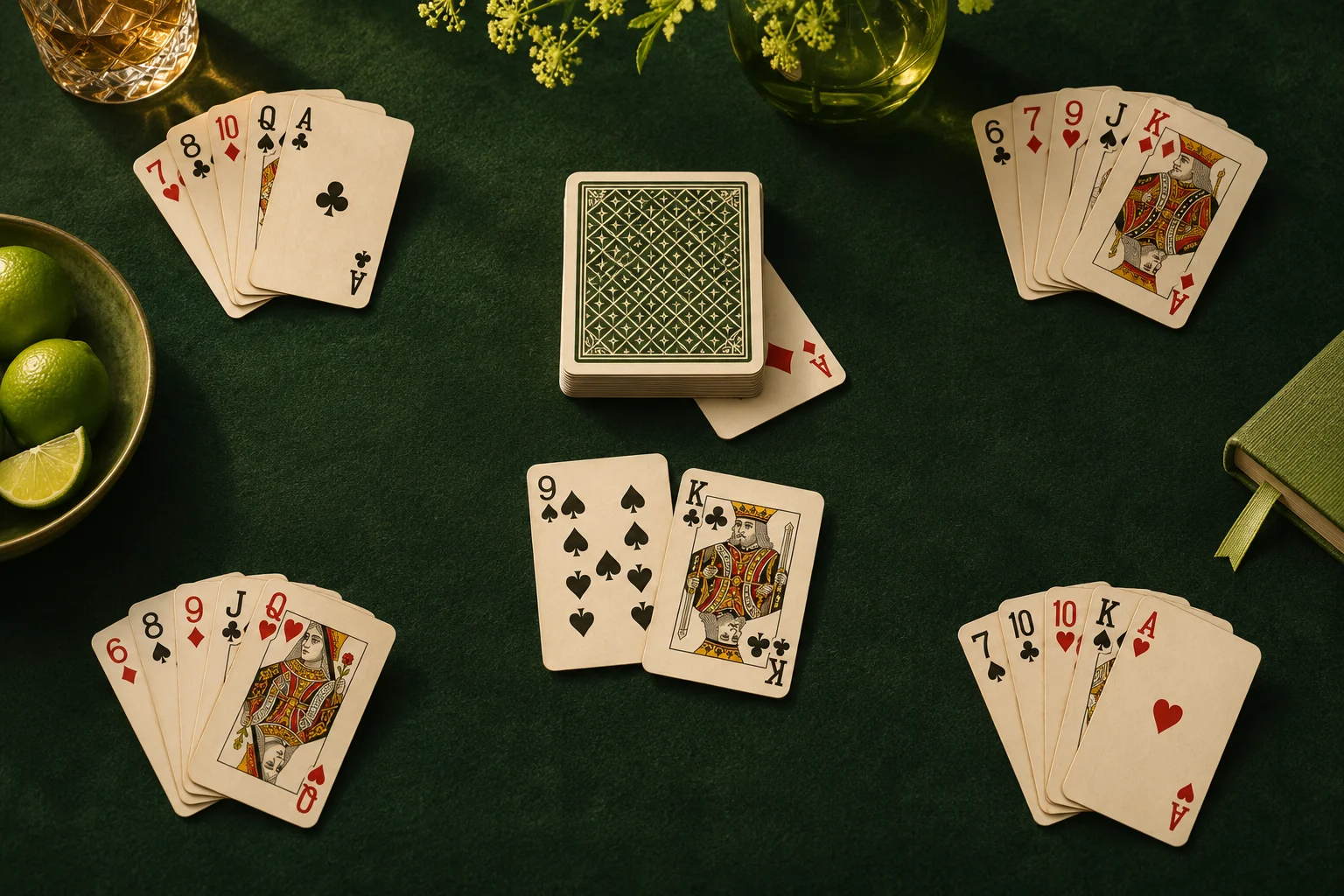
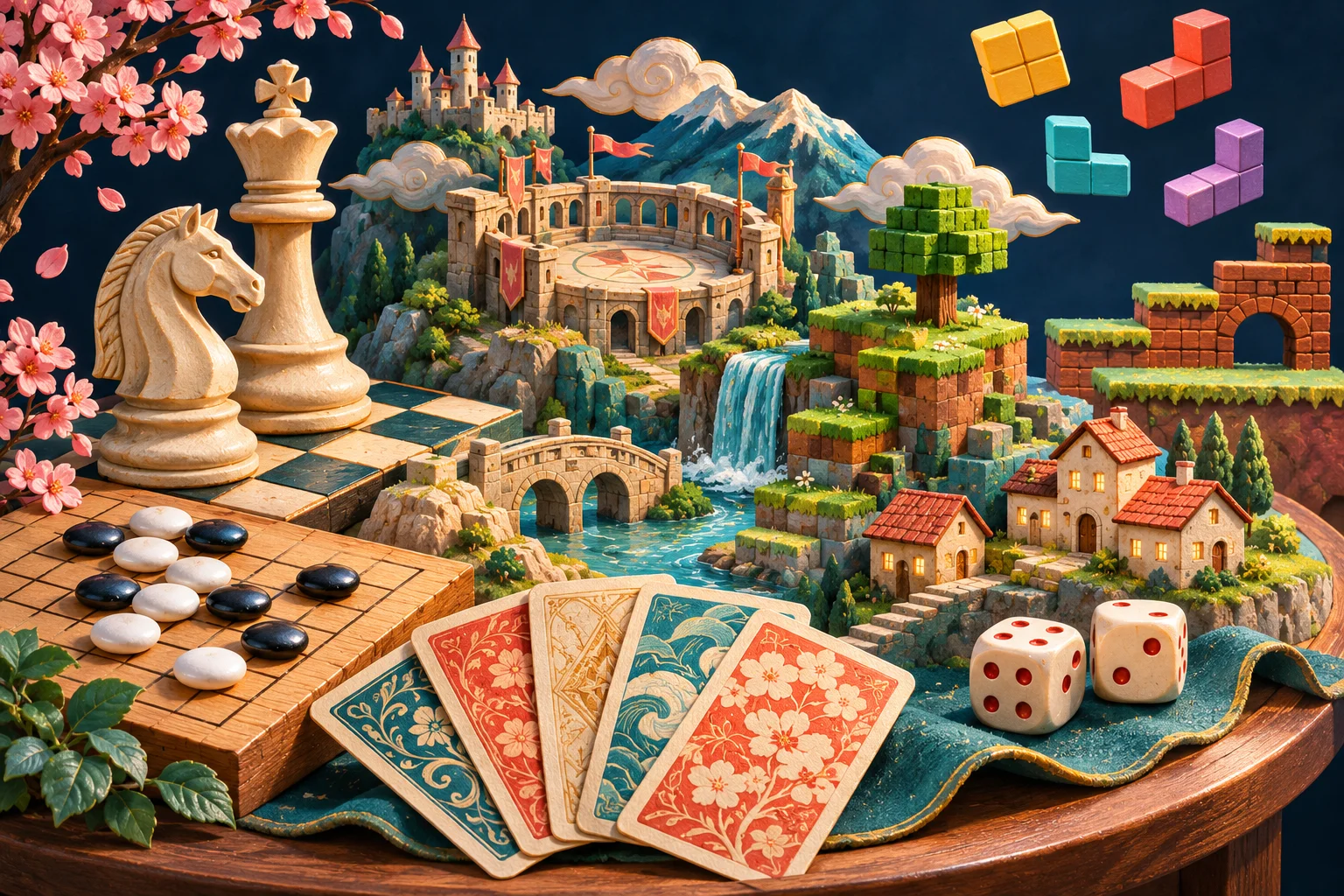
Original AI-generated conceptual illustration. The images throughout this article depict themes of play; they are not official game artwork, screenshots, historical photographs, or rules diagrams.
The ten games at a glance
| Pick | Game | Format | Historical starting point | Main appeal |
|---|---|---|---|---|
| 1 | Chess | Strategy board game | Generally traced to India around the sixth century CE | Planning with complete information |
| 2 | Minecraft | Sandbox video game | Public development in 2009; full release in 2011 | Building, exploration, and invention |
| 3 | Tetris | Puzzle video game | Created in 1984 | Spatial decisions under pressure |
| 4 | Poker | Family of card games | Recognizable forms in early nineteenth-century America | Decisions with incomplete information |
| 5 | Go | Strategy board game | Ancient China; exact origins unknown | Territory and the whole-board picture |
| 6 | Super Mario Bros. | Platform video game | Released in Japan in 1985 | Movement, discovery, and level design |
| 7 | Monopoly | Property-trading board game | The Landlord’s Game in 1904; Monopoly sold by Parker Brothers in 1935 | Negotiation and economic rivalry |
| 8 | Fortnite | Online video game and creation platform | Original game and Battle Royale launched in 2017 | Competition, social play, and creation |
| 9 | UNO | Shedding card game | Created in Ohio in 1971 | Accessible rules and sudden reversals |
| 10 | League of Legends | Team strategy video game | Launched in North America and Europe in 2009 | Coordinated competition and mastery |
The dates above refer to different kinds of beginnings: ancient traditions, early public versions, or commercial releases. Each game’s story below explains the distinction.
1. Chess — a strategy game that crossed continents
Chess asks an inviting question: if both players can see everything, why is the next move so difficult? Its pieces move in different ways, and every choice changes what the opponent can threaten. The goal is checkmate: the king is under attack and the player has no legal way to remove that threat. The king is never actually captured. Two players begin with sixteen pieces each on an eight-by-eight board, and White moves first. FIDE’s Laws of Chess
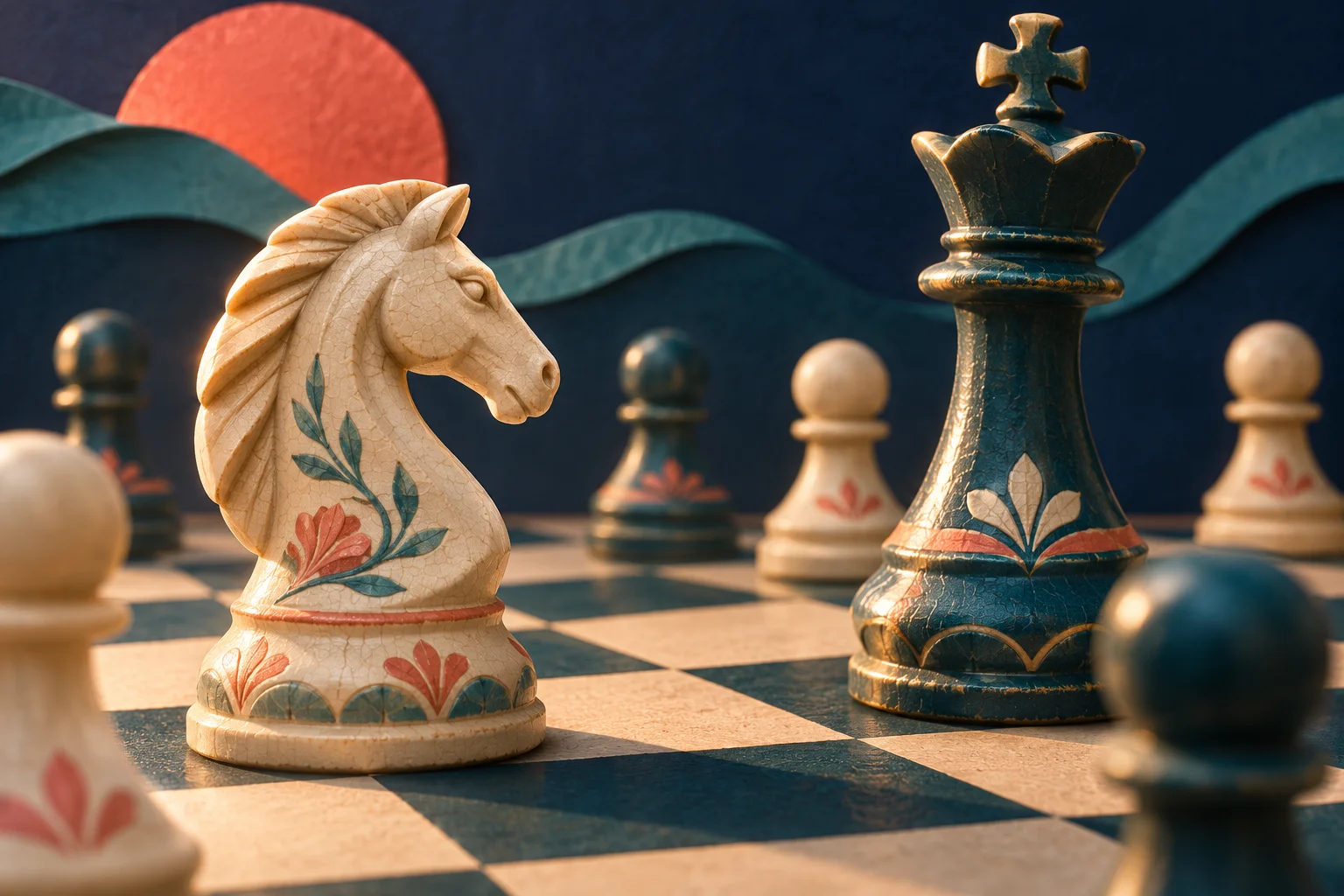
The game is generally traced to India around the sixth century CE, although its precise beginnings remain uncertain. It traveled through Persia and the Islamic world before reaching Europe. Its changing pieces reveal that journey: the elephant became a bishop in European chess, while the king’s adviser became a queen. Modern chess grew through adaptation across cultures. The Metropolitan Museum of Art’s history of medieval chess
Organized competition added another chapter. Wilhelm Steinitz defeated Johannes Zukertort in 1886 in the match recognized as the first official world championship. In 1997, IBM’s Deep Blue defeated reigning champion Garry Kasparov over a six-game match, making chess a widely recognized stage for the development of artificial intelligence. FIDE’s account of the 1886 championship, IBM’s Deep Blue history
Chess earns its place here because a portable board can support both a first lesson and a lifetime of study. A player can enjoy the immediate puzzle of defending a piece while slowly learning how pawn structures, open files, and king safety shape a position.
Start here: learn the legal moves, then practice developing your pieces, contesting the center, and keeping your king safe. Before moving, ask what your opponent is threatening. A well-understood short game teaches more than a memorized opening you cannot explain.
2. Minecraft — the game that makes players builders
Minecraft’s central idea is wonderfully direct: the landscape is made of blocks, and you can change it. Gather materials, craft tools, dig underground, or build something that exists only because you imagined it. Survival makes resources and threats part of that process; Creative gives construction and experimentation more room. The same world can become a small shelter, a collaborative town, or an elaborate machine. Minecraft’s introduction to the game
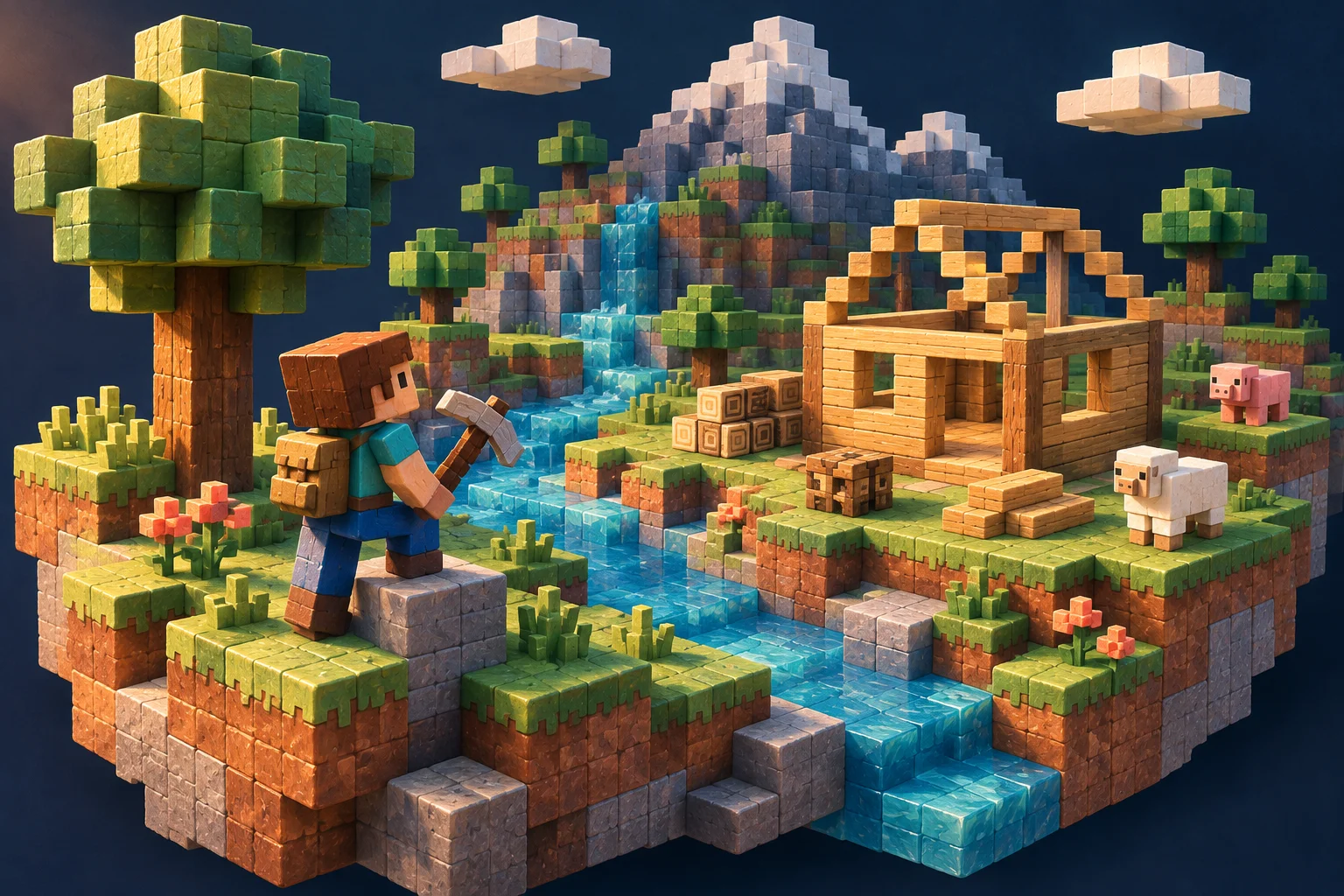
Markus Persson’s early project became publicly available in May 2009. Minecraft’s official anniversary celebration marks May 17 as its birthday. Players explored and built in early versions for more than two years before the full version 1.0 arrived at Minecon on November 18, 2011. That release added an “ending” through the Ender Dragon encounter, while leaving the world open to further play. Minecraft’s fifteenth-anniversary article, Xbox Wire’s history of Minecraft
Its next chapters expanded both access and purpose. A mobile edition appeared in 2011, an Xbox 360 edition in 2012, and Microsoft acquired Mojang in 2014. Minecraft Education followed in 2016; Better Together began connecting supported Bedrock platforms in 2017. The official anniversary timeline also records a historical milestone of 300 million copies sold in 2023. That figure is a dated sales total, not a count of people currently playing. Xbox Wire’s retrospective, Minecraft’s anniversary timeline
Its importance goes beyond the size of a world. Minecraft gives players tools to supply their own goals. A finished castle can become the setting for someone else’s adventure, while a modest shared building project can be enough for an evening with friends. The creative process becomes part of the game’s content.
Start here: build one small home in Creative, then try a Survival world if gathering and risk appeal to you. Give yourself a concrete first project; an unlimited canvas becomes easier to enjoy when you have somewhere to begin.
3. Tetris — seven shapes and an enduring challenge
Tetris turns arranging objects into a race against your own previous decisions. Rotate and position falling shapes made of four blocks. Complete a horizontal line and it disappears, creating room to continue. Leave awkward gaps and the stack becomes harder to manage. The objective can be understood in a moment; consistently making good placements takes much longer. MoMA’s Tetris collection entry
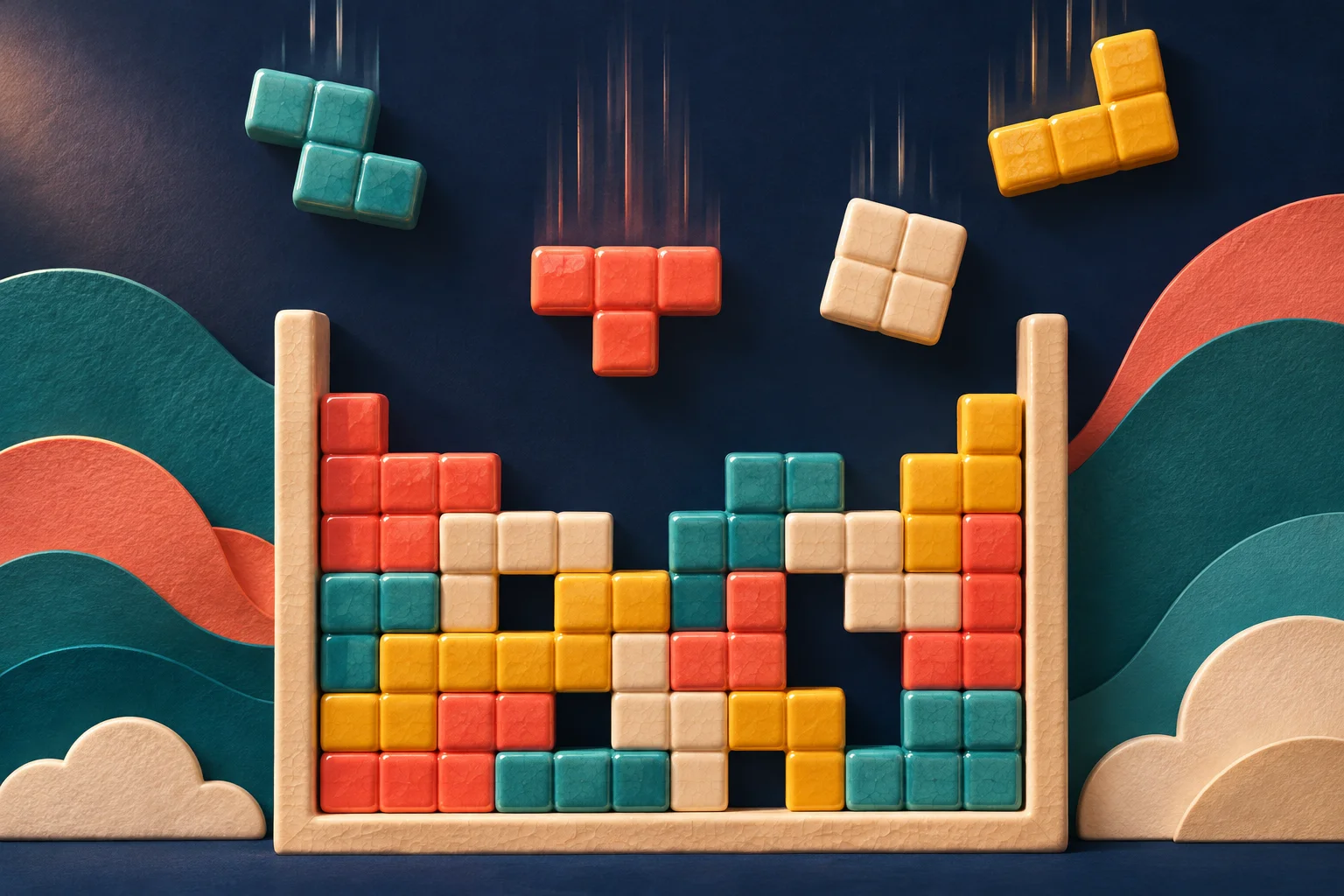
Alexey Pajitnov created Tetris in Moscow in 1984 on an Electronika 60 computer. An IBM PC version followed in 1985, and releases in North America and Europe in 1987 carried the puzzle farther. Its breakthrough handheld chapter came in 1989, when Henk Rogers secured handheld rights and licensed them to Nintendo. The Game Boy pairing helped make the game familiar far beyond dedicated computer players. The Tetris Company’s historical timeline, MoMA on Tetris and Game Boy
The core idea survived changes in screens, controls, and presentation. The Tetris Company formed in 1996; later releases included the audiovisual treatment of Tetris Effect in 2018 and the multiplayer competition of Tetris 99 in 2019. These are different experiences built around the same satisfaction of fitting shapes together and clearing space. The official Tetris timeline
Tetris belongs on this list because its challenge travels so well. It needs little narrative explanation, and success produces a visible result: a messy surface becomes cleaner. Yet the apparently simple puzzle keeps changing as yesterday’s placement becomes today’s obstacle.
Start here: keep the surface reasonably even, watch the next-piece preview when available, and avoid covering empty spaces you cannot easily reach. When you lose, identify the first difficult hole you created. That is usually more useful than blaming the last piece.
4. Poker — a worldwide language of uncertainty
Poker is a family of games connected by betting, hand values, and incomplete information. Texas Hold’em provides a familiar example: each player receives two private cards, and five community cards are revealed in stages. At showdown, the best five-card hand wins. A player can also win before showdown if everyone else folds. Texas Hold’em rules
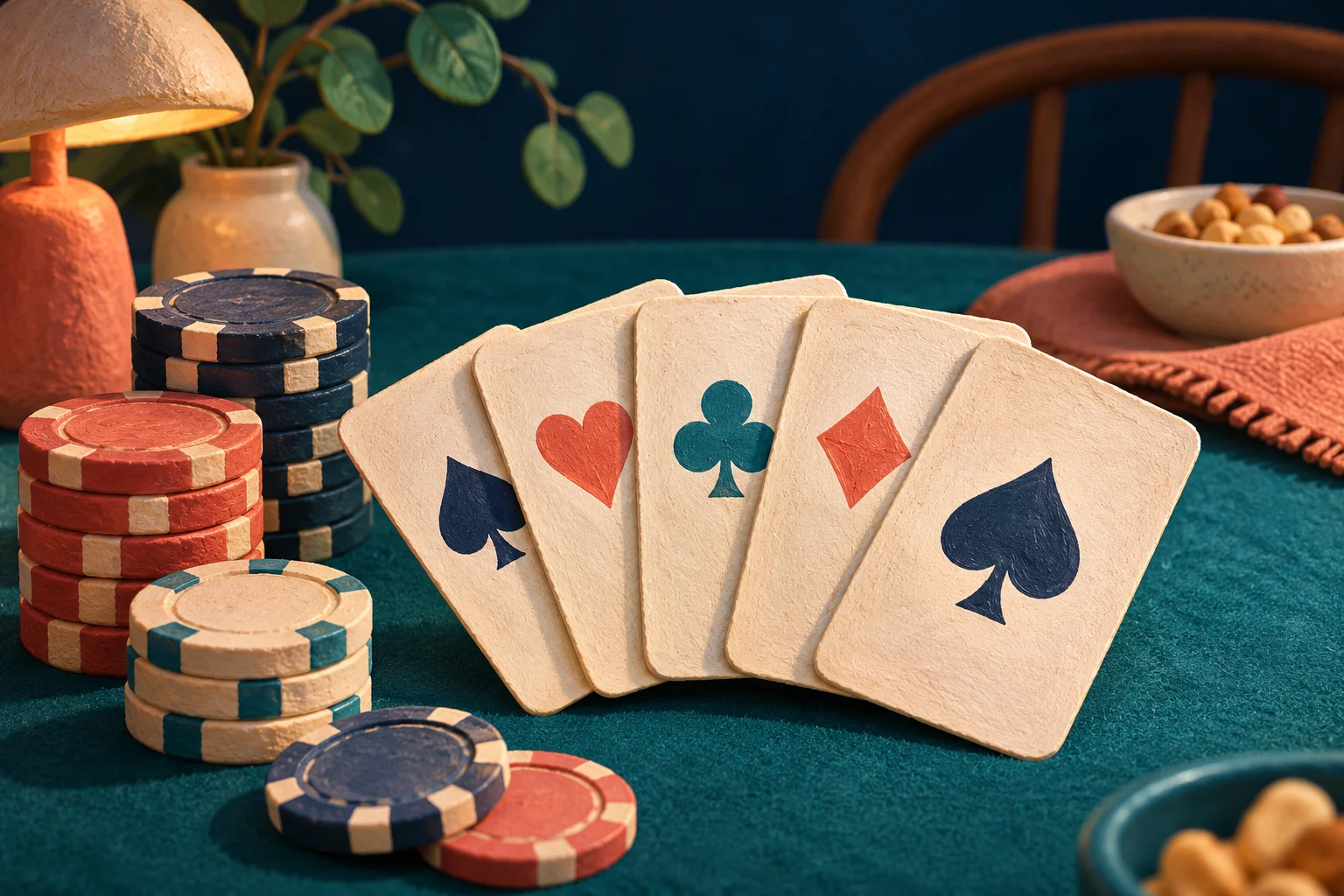
Recognizable poker developed in early nineteenth-century America, particularly around New Orleans and Mississippi riverboat play. Accounts describe a twenty-card game being played by 1829; fifty-two-card forms expanded during the 1830s, with further developments such as the draw changing how hands unfolded. Its exact birthday and sole inventor are unknown. Claims that poker descends directly from one particular ancient game simplify a much less certain history. Game historian David Parlett’s poker history
The tournament era gave the game a new public stage. The first World Series of Poker in 1970 brought seven invited players to Binion’s Horseshoe, where Johnny Moss was selected as the winner by vote. In 2003, Chris Moneymaker won the Main Event after qualifying online, becoming a defining figure in the early internet-era poker boom. The contrast between those two events shows how the game’s audience and routes into competition changed. The World Series of Poker’s official history
Poker’s appeal lies in the gap between what happened and what you can know. An opponent’s bet might represent strength or a bluff. A sound decision can still lose a hand, which makes judging your choices more demanding than simply counting wins. The social reading matters, but so do probability, patience, and knowing when to fold.
Start here: learn the hand rankings and practice a clearly defined variant with chips that have no cash value. Review whether a decision made sense with the information available at the time. Do not assume the winning player necessarily made the better decision in every hand.
5. Go — an ancient game with a vast strategic horizon
Go begins with an empty grid. Two players alternately place black and white stones on its intersections, building positions that compete for control of the board. Stones remain where they are placed unless captured. A stone or connected group is captured when an opponent’s move removes its last liberty: an empty intersection directly adjacent along the grid lines. Exact scoring procedures differ among rulesets. The British Go Association’s rules introduction
Go originated in ancient China and has more than two millennia of history, but its exact beginnings and inventor are unknown. Stories about emperors inventing it belong to its legends. It reached Japan before the eighth century and became established at the imperial court. In 1612, shogunal stipends for leading players helped support the traditions that developed into four major Japanese Go schools. The British Go Association’s historical overview
The game continued to change as inherited authority gave way to tournament competition. In 1938, Honinbo Shusai transferred his hereditary title to the Nihon Kiin. A very different milestone arrived in March 2016, when AlphaGo defeated Lee Sedol 4–1 in Seoul. That match made an ancient board game central to an international conversation about machine learning and human creativity. Go’s historical development, Google DeepMind’s AlphaGo account
Go deserves a place here for the way a small ruleset produces decisions at several scales. You might fight to save a group in one corner while your opponent builds influence elsewhere. Winning a local battle can still leave you behind across the whole board. The pleasure comes partly from learning to see those competing priorities.
Start here: use a nine-by-nine board and concentrate on liberties, connected groups, and secure territory. Move to larger boards when you are comfortable finishing and scoring a game. The British Go Association recommends progressing through smaller boards before the standard nineteen-by-nineteen format. Guidance for new Go players
6. Super Mario Bros. — an adventure taught through movement
Super Mario Bros. makes running and jumping feel like an entire vocabulary. Cross gaps, avoid enemies, discover hidden routes, and use power-ups to change what Mario can do. A Super Mushroom makes him larger, a Fire Flower adds a projectile attack, and a Super Star grants temporary invincibility. Its challenges encourage you to learn by moving through the world. Nintendo’s original Super Mario Bros. instruction booklet
The original Super Mario Bros. was released in Japan on September 13, 1985, for Nintendo’s Family Computer, or Famicom. Its journey through the Mushroom Kingdom sends Mario to rescue Princess Toadstool and restore her kingdom. This is the 1985 side-scrolling adventure; the broader Mario series would carry its characters and movement into many other kinds of game. Nintendo’s history of the original Super Mario Bros.
Later entries kept finding new uses for movement. Super Mario 64 took the series into three-dimensional spaces in 1996. Super Mario Galaxy explored unusual gravity in 2007. Super Mario Maker invited players to create courses in 2015, while Super Mario Odyssey in 2017 and Super Mario Bros. Wonder in 2023 continued its habit of building surprises around familiar actions. Nintendo’s series timeline
Its place on this list comes from a design idea that is easy to feel: a jump can be both a tool and a question. Can you reach the platform? Can you land safely? Is there another route above the obvious one? The best moments reward attention as well as dexterity, so repeated attempts can uncover something new.
Start here: spend a little time feeling how movement and jump distance interact. Watch a hazard before rushing toward it, and treat an unsuccessful attempt as information about spacing or timing. You do not need to discover every secret on your first trip through a level.
7. Monopoly — the family game with a radical ancestor
Monopoly turns a circuit of properties into a contest of cash, leverage, and negotiation. Players roll dice, buy and trade properties, collect rent, and develop complete color groups with houses and hotels. Bankruptcy removes players from the contest. Its most memorable exchanges often happen in the deals between turns, when two people disagree about what a property is worth. Hasbro’s classic Monopoly rules
Its history begins well before the familiar commercial box. Elizabeth “Lizzie” Magie patented The Landlord’s Game in 1904 to illustrate economic ideas associated with Henry George and the advantages enjoyed by landowners. She patented another version in 1924. Players circulated and modified versions in communities and colleges; the version encountered by Charles Darrow already used Atlantic City street names. The Smithsonian’s account of Magie and Monopoly
Parker Brothers began selling Monopoly in 1935 and promoted Darrow’s success story. That same year, Magie sold her patent rights to the company for $500 without royalties. The commercial game grew out of a longer process of invention and adaptation, making the familiar tale of one unemployed man inventing everything an incomplete account. Smithsonian Lemelson Center, Library of Congress on the Monopoly patents
That origin gives Monopoly unusual historical tension: an ancestor designed to expose the consequences of concentrated ownership helped produce a competition in which players seek exactly that advantage. Around a table, the abstract system becomes personal. A lucky landing can rescue someone, while a rejected trade can shape the rest of the game.
Start here: agree on the rules before playing. In the classic rules, an unowned property goes to auction if the player landing on it declines to buy, and Free Parking pays no cash reward. Familiar house rules can change the pace and cash supply, so check the rulebook for your edition. Official classic rules
8. Fortnite — from survival game to a place for making games
Fortnite’s history contains two launches that are often compressed into one. The original cooperative fort-building survival game entered paid early access on July 25, 2017. Fortnite Battle Royale then became free for everyone on September 26, 2017, introducing its large-map, last-player-standing competition to a wider audience. Those dates describe different parts of the same expanding project. PlayStation’s original launch announcement, Epic’s Battle Royale announcement
The 2017 Battle Royale announcement described one hundred players, a Battle Bus, destructible scenery, and building. Its particular twist was that players could alter their immediate surroundings while competing. Zero Build, launched in March 2022, later offered a version without that building mechanic, changing which skills a player needed to emphasize. Epic’s 2017 introduction, Epic’s Zero Build announcement
Creation became another major strand. Fortnite Creative opened to everyone in December 2018. Unreal Editor for Fortnite entered public beta in March 2023, giving creators a more extensive toolset for building and publishing experiences inside Fortnite. Its identity had expanded from a particular survival contest toward a platform hosting different ways to play. Epic’s Creative announcement, The UEFN beta announcement
Fortnite earns its place through that combination of competition and authorship. The question “what are we playing tonight?” can refer to a familiar battle format or an experience someone else built. Its evolution shows how a game can also become a distribution space for games.
Start here: choose the kind of experience you actually want. Zero Build is an option if you prefer to learn positioning and combat without construction; other modes and creator-made experiences have their own rules. Read the description before assuming that every Fortnite session follows the same format.
9. UNO — a small deck with a big personality
UNO’s appeal starts with a clear task: empty your hand. In classic play, match the top discard by color, number, or symbol, and use action or Wild cards to change the situation. Players begin with seven cards. Call “UNO” when playing your next-to-last card, and continue until someone goes out. Official scoring turns those rounds into a race toward five hundred points. Mattel’s classic UNO instructions
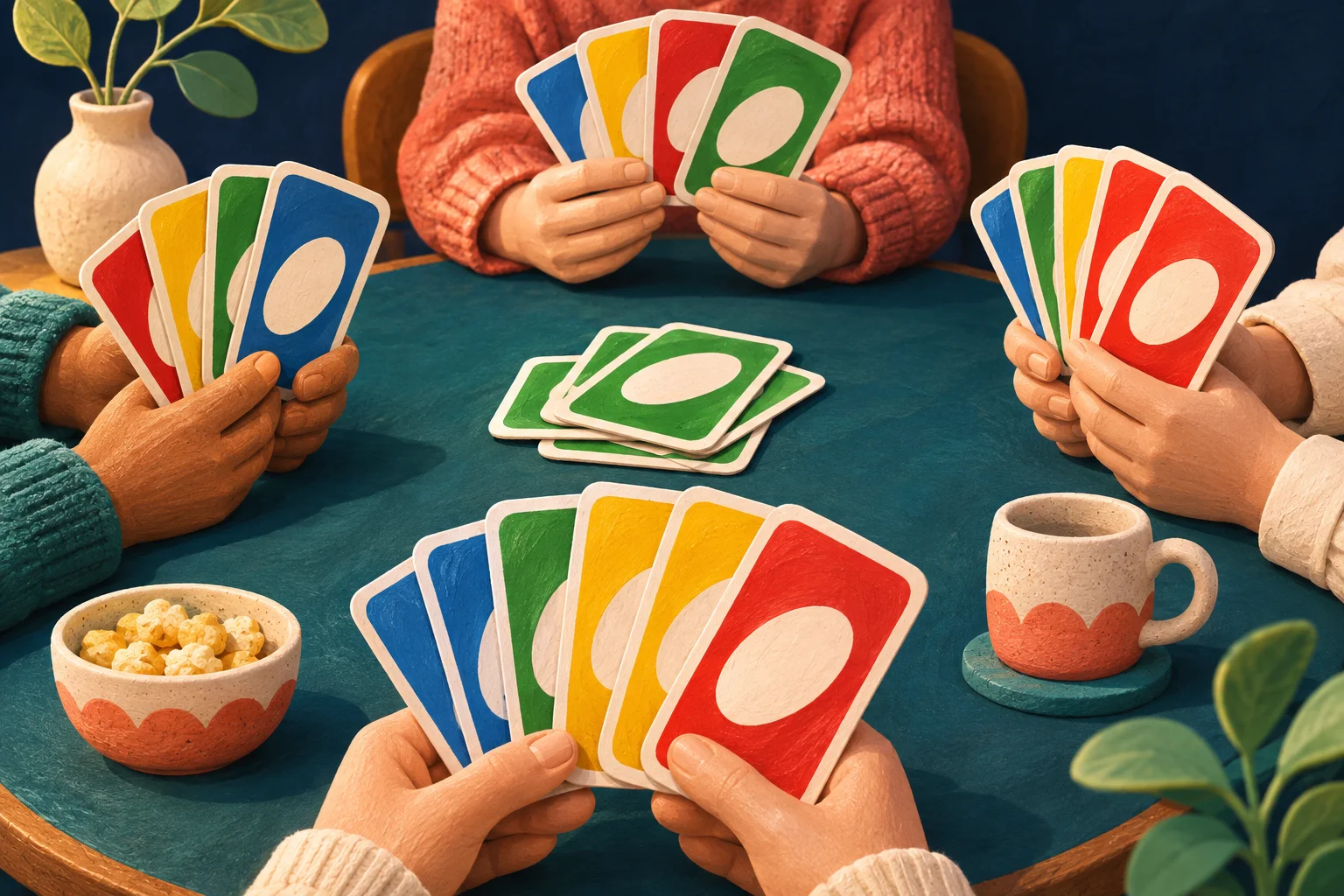
The game began in 1971 with Merle Robbins, an Ohio barber who played Crazy Eights with his family. His idea included putting special-card actions directly on the cards, making them easier to remember. The family initially produced five thousand copies and sold them while traveling. Later, Bob Tezak expanded the game’s marketing and redesigned its packaging. The Strong National Museum of Play’s history of UNO
By its fiftieth anniversary in 2021, Mattel reported that UNO was available in more than eighty countries. That dated measure of distribution helps explain its international familiarity without pretending to count everyone who has ever played it. Its journey from a family’s card-table idea to a widely distributed game is part of what makes the story appealing. Mattel’s fiftieth-anniversary announcement
The deck also creates a useful balance between visibility and surprise. Everyone can see how many cards an opponent holds, but the contents remain hidden. A player close to winning might be stopped by an action card, while a carefully saved Wild can become an escape route. That keeps the table involved even when it is someone else’s turn.
Start here: use the rules for the edition in front of you. In the classic instructions, a draw penalty means drawing the required cards and missing the turn; passing an ever-larger penalty onward is not the default. Some variants change that rule, so settle it before the first argument. Classic UNO rules
10. League of Legends — teamwork at the center of the contest
League of Legends turns individual actions into a shared strategic problem. In the standard Summoner’s Rift format, two teams of five champions earn gold and experience, contest objectives, overcome defensive structures, and aim to destroy the opposing Nexus. Your own decisions matter, but their value depends heavily on what teammates and opponents are doing elsewhere. Riot’s guide to League of Legends
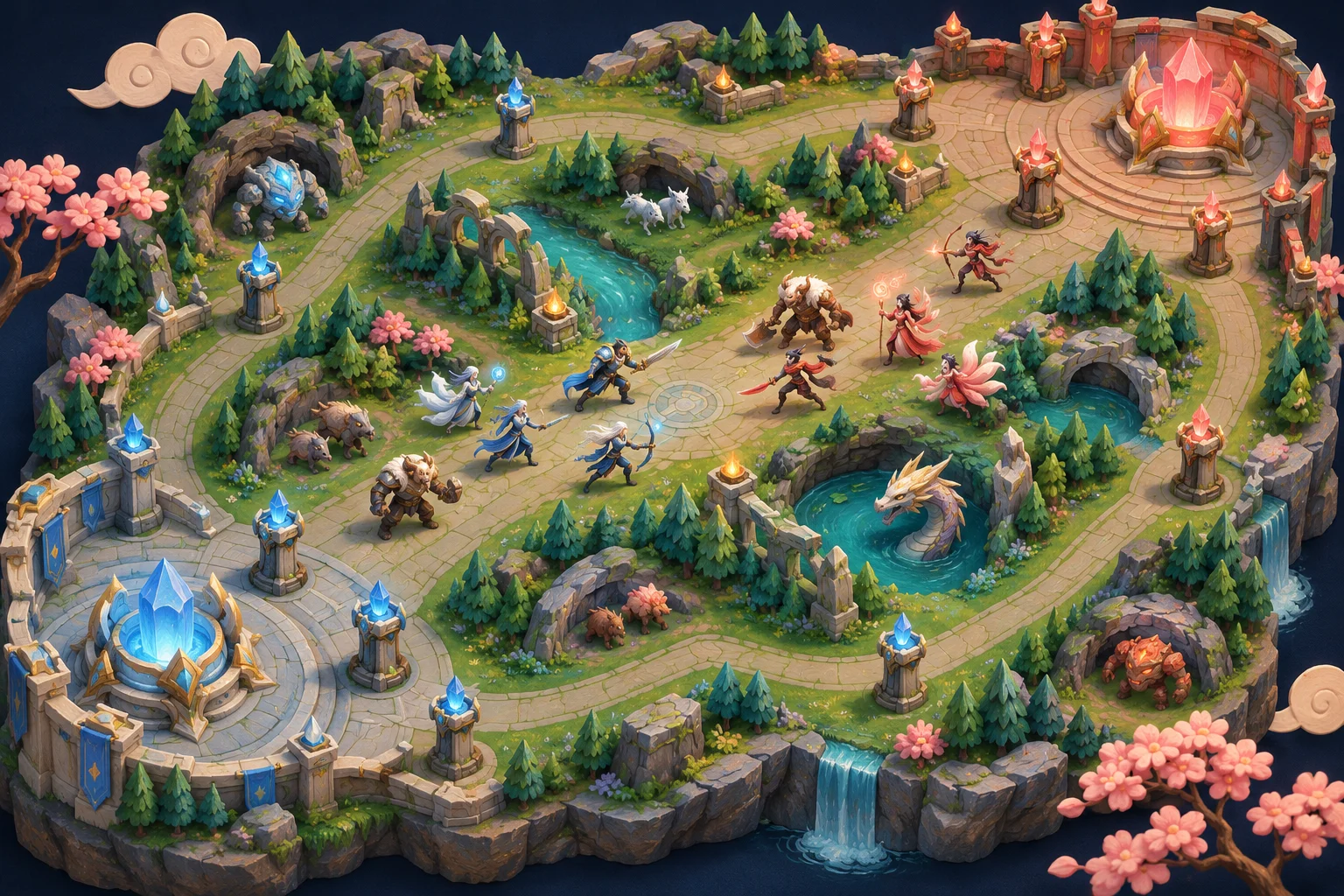
Riot Games launched League in North America and Europe in 2009, then expanded into regions including Korea, China, Brazil, and Latin America. Before release, Riot announced that the game would be free to play, with optional purchases supporting customization and additional content. Its repeatable match format gave players a reason to return while deepening their understanding of roles, matchups, and coordination. Riot’s historical League of Legends fact sheet, Riot’s original free-to-play announcement, reproduced by GameSpot
Its cultural reach also grew beyond the match itself. The virtual pop group K/DA debuted in 2018, while the animated series Arcane premiered globally on Netflix on November 6, 2021. These developments gave people additional ways to encounter the characters and setting, including people who had never learned to play a full match. Riot’s fact sheet on K/DA, Riot’s Arcane premiere announcement
League belongs here because it illustrates the depth of a repeated team contest. A familiar map does not make every match the same: different decisions, characters, and opponents create new situations. Organized competition and a broader fictional world then give that activity a life beyond a player’s own sessions.
Start here: learn one role and a small set of champions before trying to understand everything at once. Practice basic movement, objectives, and the map in introductory modes. Look for one decision you can improve each match, such as arriving with teammates rather than fighting alone.
What these games reveal about the history of play
These ten games suggest several ways a game can endure. Chess and Go make room for deep study. Tetris and Super Mario Bros. create satisfying actions that remain interesting through repetition. Poker and UNO keep hidden information in the hands of other people. Monopoly makes negotiation part of the contest, while Minecraft and Fortnite give players tools to create new experiences. League of Legends builds its challenge around coordination.
Their histories also show why the simplest origin story is not always the best one. Ancient games traveled across cultures. Monopoly emerged through invention, circulation, and adaptation. Minecraft developed in public before its full release. Fortnite’s identity changed as additional formats and creative tools arrived. A game’s beginning matters, but so do the people who teach it, alter it, organize around it, and bring someone new to the table.
Which game should you try first?
- For a thoughtful two-player contest: start with chess, or try Go on a small board.
- For a family or friends’ card table: UNO offers a compact entry point; poker adds deeper hidden-information decisions when played with no-cash practice chips.
- For negotiation: choose Monopoly and agree on the edition’s rules first.
- For a solo skill challenge: try Tetris for spatial decisions or Super Mario Bros. for movement and timing.
- For open-ended creation: choose Minecraft; explore Fortnite’s creator-made experiences if you also enjoy discovering what others build.
- For coordinated competition: League of Legends rewards learning with a team, while Fortnite offers several different competitive formats.
The games discussed here are independent titles and traditions, not a list of games available on Tailorgame. For a card game you can play on this site, explore our Durak rules, history, and variants guide. To work on an idea of your own, read how to turn a small idea into a useful game brief.
Questions about the world’s top games
What is the number one game in the world?
There is no universal answer across all formats. Copies sold, monthly active players, registered accounts, and casual tabletop participation are different measures. This article selects ten influential games rather than declaring a statistically proven global winner.
Which game on this list is the oldest?
Go has a documented tradition extending more than two millennia into the past, while chess is generally traced to around the sixth century CE. Go’s precise invention date is unknown. Its long history does not establish that it is the oldest game of every kind. The British Go Association’s history, The Met’s chess history
Is poker one game or several?
It is a family of games. Texas Hold’em is the example explained here; other forms use different dealing and betting structures. Agree on the variant before you play.
Can I use the illustrations to learn the rules?
Use the written explanations and linked rules. The illustrations are original AI-generated interpretations of each game’s themes. They do not reproduce official components, legal positions, or exact gameplay states.
A little inspiration.
Now make it your own.